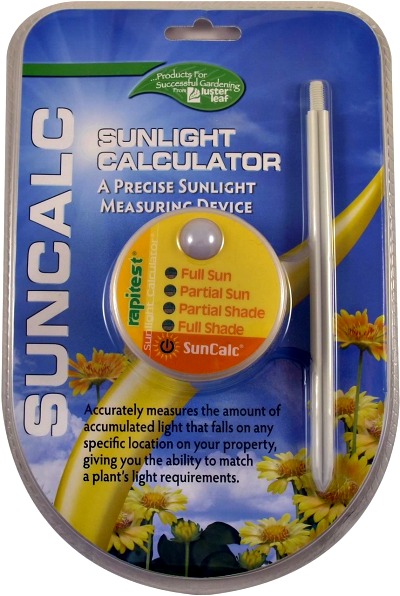
Suncalc Sunlight Calculator by Luster Leaf Review

best sunlight calculator

lusterleaf.com


I had quite a few emails about sunlight calculators and why I like the Suncalc 1875 Sunlight Calculator by Luster Leaf. So I decided to write a short article and review. You can see it here: Luster Leaf 1875 Rapitest Suncalc Sunlight Calculator

When you buy plants or flowers they have a tag that among other things lets you know the lighting requirements: Shade, Partial Shade, Partial Sun and Sun. These categories specify a range of time that the sun hits a spot in your garden.

  • Shade: 0-2 Hours of sun
  • Partial Shade: 2-4 Hours of sun
  • Partial Sun 4-6 Hours of sun
  • Full Sun 6+ Hours of sun

One of the challenges of gardening is to understand how much sun each area of your garden gets during a sunny day. Once you do, you can match plants, veggies and flowers with the same sunlight requirements to a good spot in your garden. This can greatly improve your gardening success.

In the past, one method gardeners would use is the creation of a Garden Sun map. This involved sketching a picture of their garden area, including any building or trees. Then every hour they would note where the sun was hitting their property and mark the time on the map. They would also draw a line to show where the sun stopped and the shade started. By the end of the day they would be able to draw a new map showing areas of sun with start and end times. That would help them to identify the shade, partial shade, partial sun and full sun areas of the garden.

It’s a tedious process and many gardeners don’t have the time or inclination to create Garden Sun maps.

An alternative to manually creating a Sun Map is to use a Sunlight Calculator. This is a device that measures the amount of accumulated sunlight in a specific garden location. Some sunlight calculators require multiple readings and you then take an average of the readings. Others give you a reading after a testing period of a given number of hours.

So I love gardening – the digging in the dirt, planting, watering and nurturing my plants. I grow flowers, herbs and vegetables. The last thing I want to spend my time on is manually mapping the sunlight in my garden. I also think the process is somewhat subjective. That’s why I use a sun calculator.

I picked the Suncalc 1875 Rapitest Sunlight Calculator by Luster Leaf for a number of reasons. Here are the Pros and Cons.

Pros

  • It’s simple

I have to elaborate on this point. This calculator is so simple that a child could literally use it. Wait for a sunny day. Put it in a flowerpot full of soil and place it where you want to test. You can also stick it in the ground but I use the flower pot. Make sure the round gauge is parallel to the ground. Turn it on. Go do something you enjoy. Come back in 12 hours. An LED light will be blinking next to the sunlight type: shade, partial shade, partial sun or full sun. Voilà you are done. You can then test another area of the garden.

This works for container gardening too. Just put the Suncalc in a flowerpot filled with soil and put the flowerpot in the location you want to test. This can be on a balcony, patio or anywhere.

  • It’s accurate

We did a manual check of a normally sunny spot in the garden. Our manual calculation was 5 hours and the Suncalc reading was Partial Sun which was accurate.

  • It saves time
  • The price was right

Cons

  • Some people might like the exact number of hours of sun an area receives. The Suncalc gives you a category that represents a range, for example Partial Sun 4-6 Hours of sun.
  • I have read complaints that the SunCalc is not waterproof. I haven’t had any problems with this. But I have always used it on days when the weather forecast predicted sun and no rain. I saw one suggestion to put plastic wrap over the gauge. However, I wonder if that wouldn’t affect the accuracy of the gauge when the sun was out.

Conclusion

If you’re looking for a nice, simple, reasonably priced  sunlight calculator, the Suncalc by Luster Leaf is a good choice. If you need the exact hours of sunlight an area receives or if you need a sunlight calculator that’s waterproof, you should research other products.

Where to Buy

I checked online and the best price I found was at Amazon.com. Visit the link below to see current pricing.

[easyazon_block add_to_cart=”no” align=”center” asin=”B002XZLLXU” cloaking=”no” layout=”top” localization=”default” locale=”US” nofollow=”no” new_window=”default” tag=”smallgardenideas-20″]
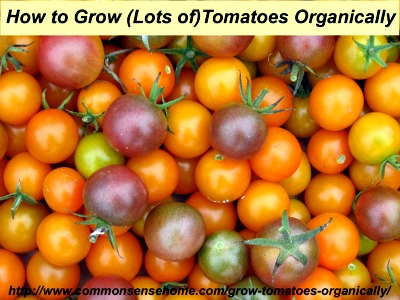


How to Grow Lots of Tomatoes Organically

how to grow organic tomatoes

commonsensehome.com

Laurie provides step-by-step instructions on how to grow organic tomatoes for beginners. It’s a detailed article with a LOT of helpful photos. She discusses:

  • Preparing the soil
  • Buying or Growing the tomato plant
  • When and how to plant
  • To add supports or not
  • Mulch
  • Watering
  • Weeding
  • Harvesting

Click on the How to Grow Lots of Tomatoes Organically link below to read this terrific article.

How to Grow Lots of Tomatoes Organically

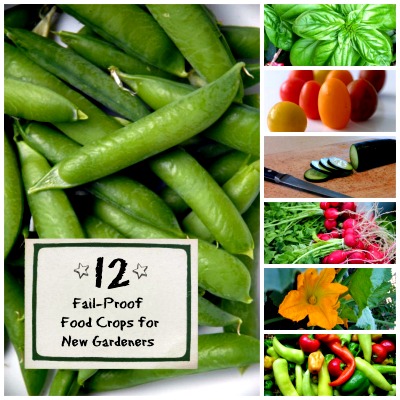
12 Fail-Proof Food Crops for Beginners

best crops for beginners

attainable-sustainable.net

Kris reveals 12 of the easiest and best plants for beginners to grow in their gardens. She divides them up by season.

There are 5 veggies that can be planted in the cool season: spring or fall. Then there are the warm season vegetables that love the summer sun. Seven veggies are in this group. Kris discusses each vegetable, provides helpful hints and includes specific plant varieties at times.

I would add lettuce to the list as a cool season veggie to grow.

Click on the 12 Fail-Proof Food Crops for Beginners link below to see all 12 recommendations.

12 Fail-Proof Food Crops for Beginners

How to Build a Potato Condo

how to build a potato condo


http://www.openlybalanced.com/how-to-build-a-potato-condo/

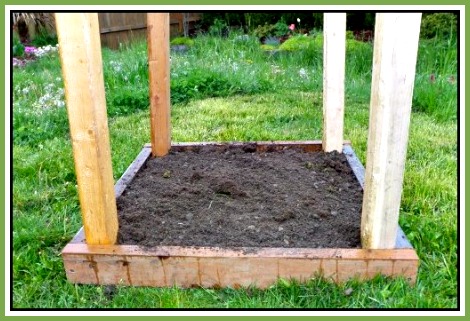
A Potato Condo is a vertical gardening method that allows you grow potatoes in wooden boxes. It works best with late-season potatoes. You start with a bottom box, fill it partially with soil and plant seed potatoes. As the potatoes grow, you add on more boards to make the box higher. You then add more soil.

Using this process of building the box or condo higher as the plants grow, results in a much greater yield. As the potatoes mature, you can remove the side boards to harvest some of them.

Jess provides a complete supplies list and directions. This is one of the better, step-by-step descriptions for building a potato condo that I’ve seen. Click on the How to Build a Potato Condo link below to read the article.

How to Build a Potato Condo

Growing Potatoes in Containers [video]

potato video

This is a short, straight-forward video that demonstrates how to grow potatoes in large pots.

How to Grow Potatoes in Containers

how to grow potatoes in containers

containergardening.about.com

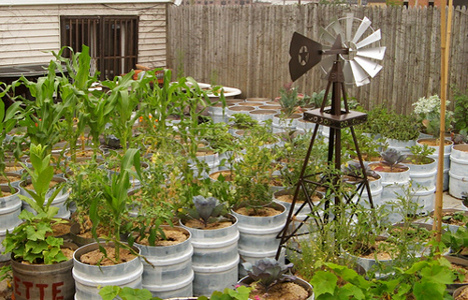
Would you like to grow potatoes but don’t have a lot of garden space? You can do it! Potatoes grow well in containers. In this slideshow article, Kerry explains all of the steps in planting, growing watering and harvesting potatoes. She also explains sunlight requirements.

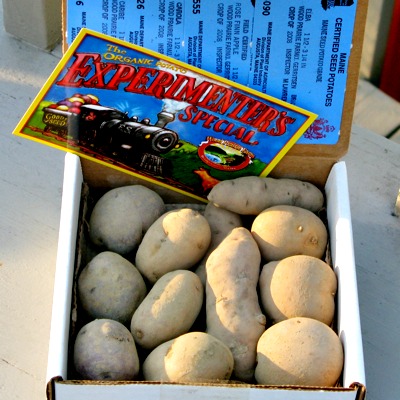
You can allow a few potatoes that you have now to sprout and use those as starter potatoes. However, you’ll have greater success if you use actual seed potatoes. You can get seed potatoes at nurseries or online. You only have to buy them once since you can reserve some of your potato crop to use as seed potatoes next year. Kerry provides one online source for organic seed potatoes which has a nice selection of different potato varieties.

Kerry mentions Smart Pots in the article. I wanted to comment on Smart Pots. I used them for the first time last year and absolutely love them. They are lightweight even when filled with soil, so moving plants is easier. Because they’re made of fabric, your potatoes or tomatoes or flowers will get extra air. The pots also drain beautifully so you have very little risk of root rot. Smart Pots come in every size from 1 gallon to 100 gallons. This is an example of the 45 gallon Smart Pot (That green thing on the front is a paper label that you pull off and discard):

[easyazon_image add_to_cart=”no” align=”center” asin=”B0055EA3AS” cloaking=”no” height=”107″ localization=”yes” locale=”US” nofollow=”yes” new_window=”yes” src=”http://ecx.images-amazon.com/images/I/41cEvZOfv2L._SL160_.jpg” tag=”smallgardenideas-20″ width=”160″]
You can see all of the Smart Pots and get more information on this page at Amazon.com

To read Kerry’s complete article, click on the How to Grow Potatoes in Containers link below.

How to Grow Potatoes in Containers

How to Start Seedlings the Natural Way

natural seed starting, how to start seeds

ittlehomesteaders.com

Some people are nervous about starting seeds in the spring. But starting seeds naturally is really pretty easy. In this article, Colleen provides step-by-step directions about how to germinate seeds. She includes links about buying heirloom and hybrid seeds, where to buy organic seed starting mix, and other supplies. Very helpful article.

Click on the How to Start Seedlings link below to read the complete article.

How to Start Seedlings the Natural Way

Three Easy Ways to Water Container Gardens

best way to water container gardens

Photo Credit: Maggie Hoffman, Flickr Creative Commons Attribution License.

One of the challenges of container gardening is keeping the soil watered. Colleen (TreeHugger.com)  shares three easy ways to water container gardens. These methods provide a slow, steady stream of water to your container gardens even in the hottest weather.

These are low-tech, commonsense solutions. One approach involves using small, unglazed terra cotta pots. There’s a video that explains how to use this method in a larger garden. For a container garden you just need to scale the method down. It’s really ingenious and has been used for centuries.

Visit the Three Easy Ways to Water Container Gardens link below to read all 3 of the watering solutions.  

Three Easy Ways to Water Container Gardens

10 Tomatoes to Grow in Your Container Garden

best tomatoes to grow in containers

Photo Credit: Ajith_chatie/CC BY 2.0


Colleen often runs out of good garden spots for her tomato plants, so she ends up using containers. In this article, she shares 10 different tomato varieties that have worked well for her when planted in pots.

Colleen admits to being obsessive about tomatoes. Her passion is clear as she discusses each variety. She covers color, flavor, shape and more. Be sure to read the end of the article, where she offers tips for container gardeners.  She also has suggestions for natural fertilizers. Very nice article.

Click on the 10 Tomatoes to Grow in Your Container Garden link below to read the complete article.

10 Tomatoes to Grow in Your Container Garden

10 Safe DIY Vertical Gardens

small garden ideas, vertical gardening ideas

sowanddipity.com

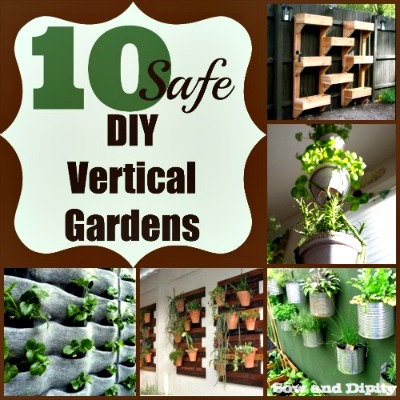
This is a nice collection of safe DIY vertical gardens. For each type of vertical garden, Shelley offers helpful tips, advice, and cautions. There are also links listed for each type of vertical garden. Shelley discusses the following types of vertical gardens:

  • Pallet Gardens
  • Fabric Plant Pockets
  • Gutter Gardens
  • PVC Pipe Gardening
  • Grow Bins and Bags
  • Plastic Bottles
  • Tin Cans
  • Glass & Terra Cotta
  • Mesh Fencing and Netting
  • Wood Planters

Click on the 10 Safe DIY Vertical Gardens link below to read this very helpful article.

 10 Safe DIY Vertical Gardens

« Previous Page
Next Page »

SUBSCRIBE TO OUR NEWSLETTER

Recent Posts

  • How to Use Eggshells in the Garden
  • Best Chocolate Scented Flowers
  • Miniature Flowering Bulbs
  • How to Convert a Whiskey Barrel into a Water Barrel
  • 18 DIY Stacked Pot Ideas

AFFILIATE DISCLAIMER

SmallGardenIdeas.net is a participant in the Amazon Services LLC Associates Program, an affiliate advertising program designed to provide a means for sites to earn advertising fees by advertising and linking to amazon.com

This site uses cookies: Find out more.